

Desert Essentialism
Essentialism (n.) A visual art practice in which a work is reduced to its necessary elements, removing all non‑essential detail so the core gesture, form, or atmosphere can emerge. Essentialism relies on clarity, distillation, and intentional omission, allowing the viewer to complete the image through imagination and interpretation.
Essentialism in this work is the belief that an image doesn’t need to show everything; it only needs to show what is necessary. The rest is completed by the viewer. Each piece offers a distilled set of cues—color, horizon, reflection, geometry—and invites the audience to supply the narrative, the emotion, and the meaning.
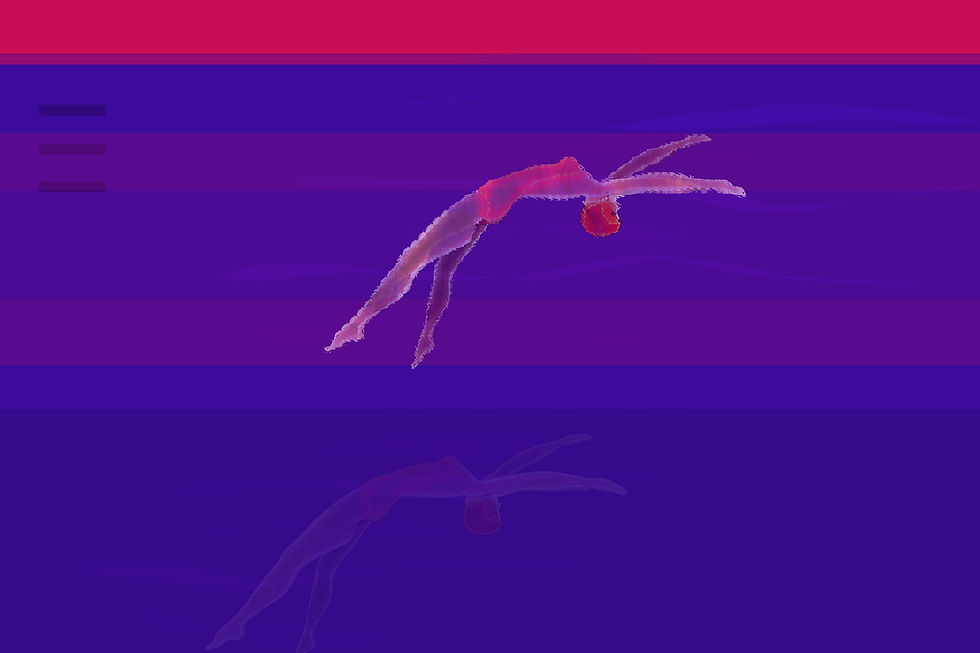
Rather than presenting a fully constructed world, these compositions leave intentional gaps. A diver becomes a gesture. A flag becomes a symbol. A pool becomes a lens. The viewer steps into that space and finishes the image in their own mind. In this way, the artwork is not a monologue but a collaboration: the artist provides the essentials, and the viewer brings the rest.
Essentialism here is not reduction for its own sake; it is trust. Trust that the audience can imagine the unseen, interpret the reflection, and feel the moment without being told what it means. The work becomes a form of theatre: a shared act of perception—an image that exists fully only when the viewer completes it.




Desert Pools
After working in monochromatic and bi-chromatic compositions, I set out to create a tri-chromatic compositional fugue—six pieces, each built from three dominant hues. The structure is quiet but deliberate: every color appears once at the bottom, once in the middle, skips a beat and then once at the top across the series. This embedded rhythm creates a visual cadence, a kind of chromatic choreography.
I'm combining my love of color, theatre, music, math and POOLS!


